
Energy & Sustainability
How does fault detection and diagnostics reduce building energy waste?
How fault detection and diagnostics finds energy waste, what the evidence shows and why the resolution process matters most.
Fund continuous commissioning as an operating process with a cadence, change control and a persistence measure.
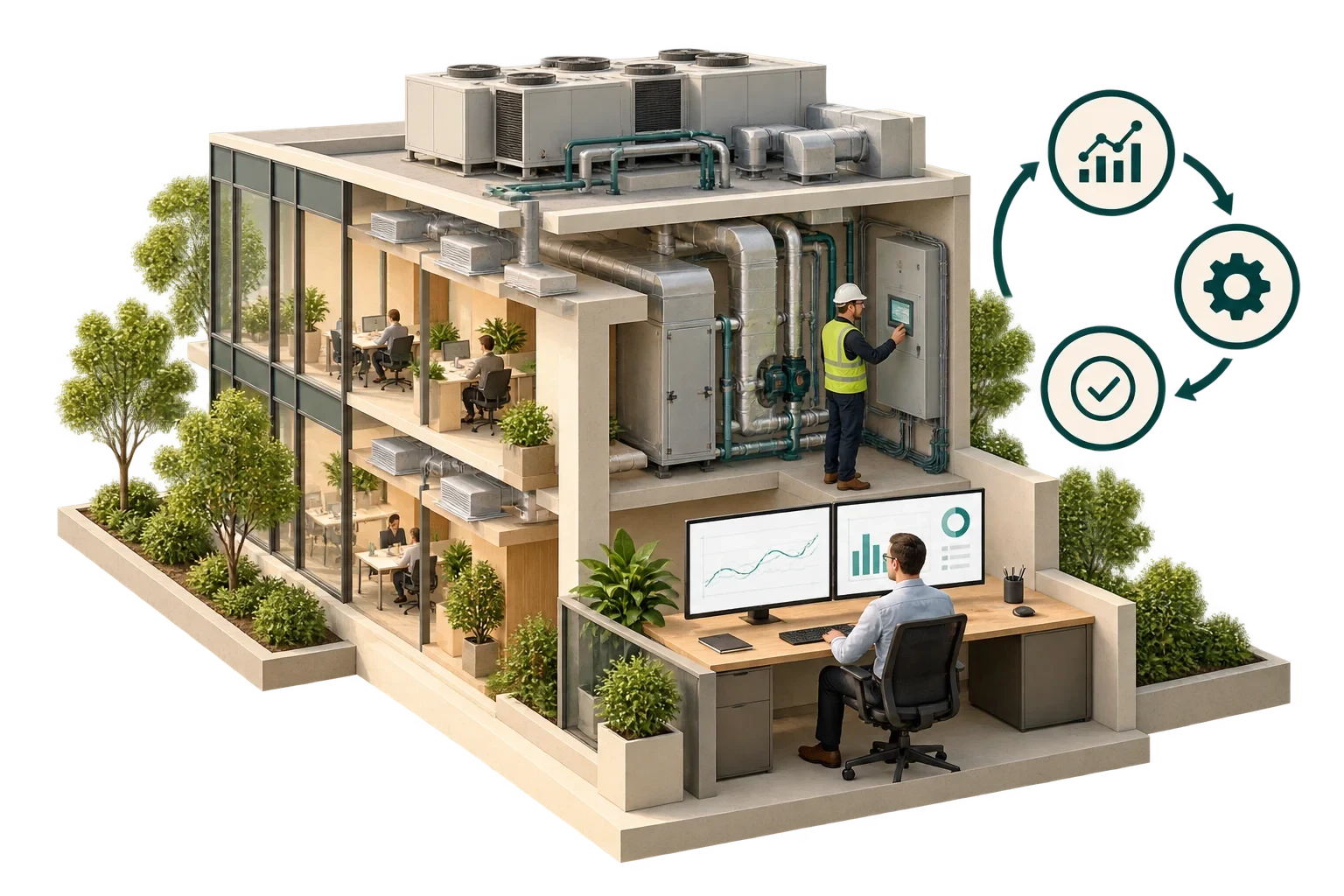
Buildings drift after handover. Setpoints get nudged, overrides are left in place, late working on one floor stretches the schedule for the whole building without anyone deciding it should, and two years on, a building that passed every commissioning test may be wasting energy. Continuous commissioning is the answer to that slow decline. It replaces the one-off exercise every few years with commissioning built into normal operation: a regular cycle of checking how systems actually perform, finding problems, fixing them and confirming the fix.
The US Federal Energy Management Program's O&M guide describes it as an approach integrated into a facility's standard O&M programme, with activities completed regularly, in contrast to recommissioning projects, which are typically distinct events. It quotes Texas A&M University's definition of the formalised continuous commissioning process developed there: "an ongoing process to resolve operating problems, improve comfort, optimize energy use and to identify retrofits".
One misunderstanding is worth clearing up at the start. Continuous commissioning is not the same thing as continuously running analytics. Software can surface opportunities; people still have to assess them, fix them and verify the result.
The FEMP guide distinguishes several approaches, each suited to a different situation:
| Approach | What it is | Suited to |
|---|---|---|
| New building commissioning | Design reviews, functional testing, documentation and training for new systems | New construction, major renovation |
| Recommissioning / retro-commissioning | A project to test and adjust existing systems to design intent or current needs | Buildings never commissioned, or falling short of their intended performance |
| Continuous commissioning | Regular, ongoing commissioning activity within O&M | Large, complex buildings with building automation, advanced metering and a well-run O&M organisation |
| Value recommissioning | Low-cost focus on the most common, quickest opportunities | Buildings without resources for structured programmes |
FEMP is candid that continuous commissioning is the costliest of the existing-building approaches, because of the staff and equipment it needs, but notes that it can catch inefficiencies as they occur. A close relative, monitoring-based commissioning, is described in Lawrence Berkeley National Laboratory's report on the Smart Energy Analytics Campaign as an ongoing commissioning process with an emphasis on continuously monitoring and analysing large amounts of data, using energy management and information systems.
The measures FEMP lists as most frequently cited in existing-building commissioning are the everyday business of a continuous programme. Setpoints and setbacks drift, and sensors need recalibrating. Boilers, chillers and air handling units are staged and sequenced inefficiently. Dampers and economisers malfunction. Equipment runs around the clock when it is not needed, heating and cooling fight each other, and distribution systems need rebalancing. And, perhaps most familiar of all, overrides are never released and the automatic weekend and holiday schedules have been switched off.
None of these faults gets caught without a process behind it. The starting point is a documented baseline of intended operation, covering key sequences, schedules and performance expectations, which is updated whenever the building's use changes. Against that baseline the team monitors the data that reveals deviations, which means having the metering and trend logging to support it. Findings are reviewed on a fixed cadence and prioritised by consequence and likely value, then assigned to named people, with each correction verified and the reasoning behind it recorded.
Two further disciplines keep the gains from leaking away. A change process stops temporary overrides becoming permanent. And persistence tracking shows whether improvements are holding: FEMP suggests metrics including a persistence index, the ratio of energy use in a given year after commissioning to use before it. Performance should be reviewed across seasons and operating modes, because a short, favourable period can flatter it.
Continuous commissioning is a commitment to staffing and process as much as to technology, so the first questions about any analytics contract concern people. Who reviews the findings, and how often? Who may change what? How will persistence be reported to management? Sign without those answers and the licence buys a dashboard.
This article connects to our work on Sustainability.
We can discuss how this subject fits the project brief.
Contact Pagin Consulting